
For a lot of families caring for an aging parent, the conversations tend to focus on the practical stuff. Is she eating well? Are his medications getting taken? Is the house still safe to live in? Those are the right questions. But there is another one that often gets skipped, and it has a surprisingly large effect on everything else.
How connected is your loved one, day to day?
Research on loneliness, social activity, and aging has grown significantly over the past decade, and the findings are hard to ignore. Social activities for older adults are not just a nice addition to daily life. They play a real role in physical health, cognitive function, emotional wellbeing, and quality of life overall. When meaningful connection drops off, the effects show up in ways that can look like other problems entirely.
What Does Social Isolation Actually Do to the Body?
Most people associate loneliness with sadness, which is fair. But the physical effects of chronic isolation are significant enough that in 2023, the U.S. Surgeon General issued a formal advisory declaring loneliness a public health crisis. The advisory noted that the health risks of social isolation are comparable to smoking 15 cigarettes a day. Studies have also linked chronic loneliness to elevated blood pressure, disrupted sleep, a weakened immune response, and increased inflammation.
For families focused on keeping a loved one physically healthy, it is worth knowing that social connection is part of that picture. It is not separate from physical health. It affects it directly.
Loneliness prevention for older adults, whether through regular visits from a family member, group activities at a community center, or simply shared meals with familiar people, is a genuine health intervention, not just a social nicety.
How Do Social Activities Affect Brain Health?
A 2025 study from Rush University found that older adults with frequent social activity had a 38 percent lower risk of developing dementia and, on average, experienced the onset of memory decline up to five years later than those who were more isolated. These are meaningful numbers.
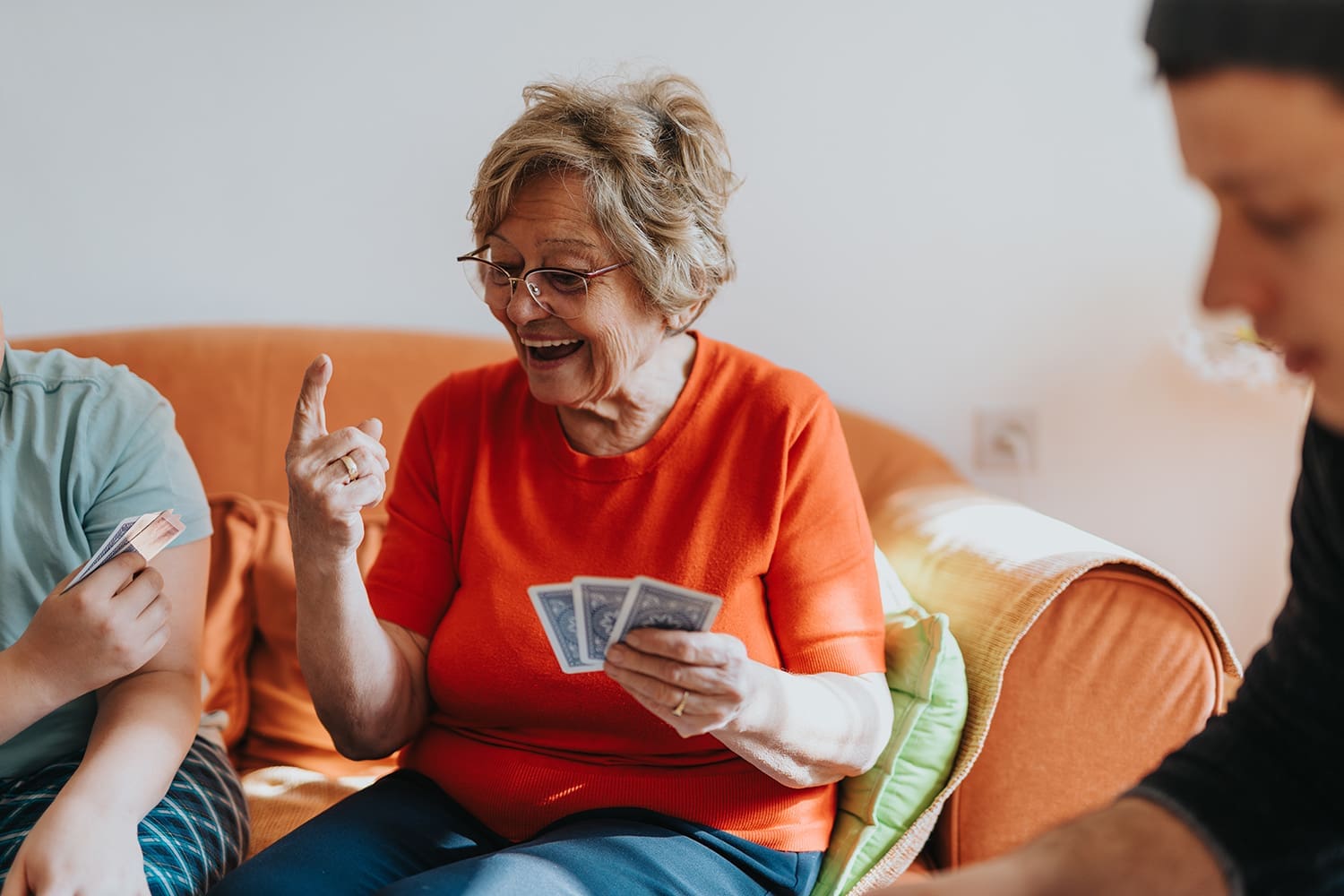
The connection between regular social interaction and brain health comes down to engagement. Conversation, group activities, shared meals, a book club, even a card game with neighbors, all of these require the brain to stay active. It is tracking names, following conversation threads, remembering context, reading other people. Over time, that kind of regular mental engagement builds what researchers call cognitive reserve, which helps the brain adapt more gradually to age-related changes.
People who stay socially connected also tend to sleep better, feel less anxious, and report a higher overall sense of purpose. Those factors compound over time. An older adult who is sleeping well, staying engaged, and spending time with people they like is in a fundamentally different place than one who is spending most of their time alone, even if their physical care needs look the same on paper.
Which Group Activities Tend to Make the Biggest Difference?
The specific activity matters less than most people assume. What the research consistently points to is regularity and a sense of genuine connection, not any particular format.
Walking clubs, art classes, book clubs, shared mealtimes, card games, music programs, community center events, all of these can be meaningful depending on the person. The key is finding something that happens often enough to create familiarity, and that involves people your loved one actually looks forward to seeing.
A few things that tend to work well across different personalities and ability levels:
- Shared meals with others at the table, rather than eating alone
- Gentle group movement like walking clubs or seated exercise with a companion
- Creative activities such as art classes, crafts, or music groups
- Reading and discussion groups, including book clubs with small numbers
- Regular games or puzzles with a consistent group
- Community events that follow a predictable schedule
- Visits from friends and family, even short and routine ones
Frequency and consistency matter more than how elaborate the activity is. An older adult who shares breakfast with the same people four mornings a week is getting something socially valuable that a monthly outing cannot replicate.
Can a Senior Center Provide Enough Social Connection?
For someone who is still independent and mobile, a local senior center or community center can be a genuinely good source of regular social activities. Programs are designed for this age group, the schedule is consistent, and it offers a reason to get out of the house a few times a week.
Where this starts to break down is when getting there becomes difficult. Transportation, energy levels, mobility, and weather all become variables. When daily needs increase and logistics get harder to manage, trips to a community center tend to drop off. That shift often happens gradually, and families may not notice right away that the social activities have stopped too.
This is one of the reasons choosing the right living environment matters for older adults who need daily support. When social connection is woven into the structure of where someone lives, it does not depend on logistics. Mealtimes are shared. Familiar faces are part of the daily routine. Activities happen in the same building. Connection becomes something that just happens rather than something that requires planning and effort.
If you are already watching for the signs that a parent may need more support, the state of their social life is worth looking at alongside their physical safety.
Is It Possible to Rebuild Social Connections After a Period of Isolation?
Yes, and the research on this is actually encouraging. Older adults who re-engage socially after a period of isolation tend to show real improvements in mood, sleep, cognitive performance, and overall well-being. The brain responds to renewed social engagement, and those benefits can show up relatively quickly.
The most effective approach is usually small and consistent rather than ambitious. A standing weekly phone call. One shared meal on the same day each week. One regular group activity at a local personal care community or community center. Something predictable that your loved one can count on.
For family members who live at a distance or have limited time, this is worth knowing. You do not have to do everything. Creating one reliable touchpoint and protecting it consistently can have a real impact. A regular Tuesday call or a standing Friday visit can provide more stability than occasional large efforts.
The goal is not to recreate a packed social calendar. It is to make sure there are enough regular, meaningful interactions that isolation does not quietly become the default.
What Should Daily Life Look Like for Social Activities to Take Root?
There is a practical question underneath all of this that families often arrive at once they understand the importance of connection. It is not just “What activities are available?” It is “What kind of environment actually supports this?”
Organized activities on a calendar are helpful. But what tends to make the biggest difference in an older adult’s daily social life is the environment around them. Shared mealtimes with familiar people. Staff who know residents well enough to notice when something is off. Neighbors who wave in the hallway. A schedule that creates rhythm and something to look forward to.
When those elements are part of everyday life, staying connected does not require effort. It is just how the day goes. That is very different from an environment where social activities are something that has to be arranged around isolation, rather than built into the fabric of daily life.
For families who want more on what daily life looks like in a personal care setting, that question is worth exploring during a tour.
A Place Where Connection Is Just Part of How Things Work
If the person you love has been spending more time alone lately, and you have been wondering whether that is affecting more than just their mood, you probably already know that socialization is crucial. The research on social activities for older adults is clear: staying connected matters for physical health, brain health, and quality of life in ways that most families do not fully realize until they see the difference firsthand.
The Wynwood House is a personal care community with five locations across Centre County and the State College area. Meals are shared. Staff get to know residents over time and build real relationships with them. Activities are part of the daily routine, not a supplement to it. And the whole environment is designed to feel like home, because for the people who live there, it is.